My blogs

My blogs are intended for information purposes, should anyone wish to read and gain some information about what they may be struggling with.

If you wish to book an initial assessment session and  explore if counselling, Rewind Therapy, Coaching or Supervision may be interest to you then please contact Jane to discuss or to arrange an appointment.

About the Author

Jane Hupston, MBACP (Accred), NCS (Professional Accred)

Jane Hupston is an experienced Integrative Counsellor and Clinical Supervisor working with adults & adolescents experiencing anxiety, overwhelm, stress, relationship difficulties, bereavement, low self-esteem, and life transitions. Drawing on a range of evidence-based approaches, including Person-Centred Therapy, Solution Focused Therapy, Dialectical Behaviour Therapy (DBT), and Cognitive Behavioural Therapy (CBT), Jane tailors her work to the unique needs of each individual.

Through her counselling practice, Jane supports clients in developing practical coping strategies, strengthening emotional resilience, and creating meaningful, lasting change in their lives.

To book an appointment please ring Jane on 07792847171

Overthinking

Overthinking   How to Stop Overthinking and Regain Mental ClarityHave you ever replayed a conversation over and over, worried excessively about a decision, or found yourself stuck in endless “what if” scenarios?If so, you’re not alone.Overthinking is the habit of dwelling on thoughts, situations, or decisions without reaching a productive conclusion. While reflection can help us learn and grow, overthinking often leads to stress, anxiety, self-doubt, and mental exhaustion.In today’s fast-paced world, many professionals, students, parents, and high achievers find themselves trapped in cycles of worry. The problem is that overthinking rarely leads to better decisions. More often, it keeps us stuck and prevents us from taking meaningful action. Why Do We Overthink?Overthinking is usually driven by one or more of the following:• Fear of failure – worrying about making the wrong choice.• Perfectionism – wanting everything to be exactly right.• Need for control – trying to predict every possible outcome.• Past experiences – previous disappointments can make us extra cautious.• Stress and anxiety – heightened stress often fuels repetitive thinking. Signs You May Be OverthinkingSome common signs include:• Replaying past conversations repeatedly• Struggling to make decisions• Imagining worst-case scenarios• Worrying about what others think• Difficulty switching off your thoughts•
Read More »

Overwhelm

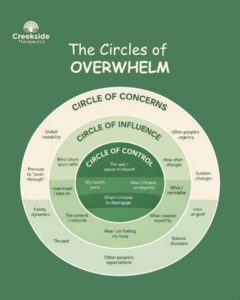
Understanding Overwhelm: When Everything Feels Too Much There are times in life when everything seems to arrive at once. Work demands increase, family responsibilities pile up, relationships feel strained, unexpected problems appear, and our minds become crowded with worries about what might happen next. This is often what overwhelm feels like.     Overwhelm is more than simply having a lot to do. It is the emotional, mental, and physical experience of feeling as though the demands being placed upon you exceed your ability to cope in that moment. When overwhelm takes hold, it can leave you feeling anxious, exhausted, tearful, irritable, disconnected, or unable to think clearly. As an Integrative Counsellor, I work with many people who come to therapy feeling completely overwhelmed by life. Often, they arrive believing there is something wrong with them because they can no longer cope in the way they once did. In reality, they are usually carrying far more than anyone was ever meant to manage alone. One of the benefits of an integrative approach is that I can draw upon different therapeutic modalities depending on what best suits the person sitting in front of me. Sometimes a Solution Focused approach can help clients identify

Read More »

Stress

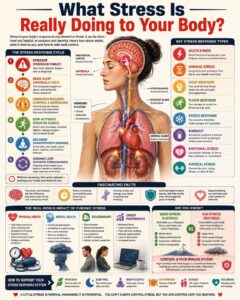
Understanding stress Stress is the body’s natural response to pressure, demands, challenges, or change. It is a normal part of life and, in small amounts, can help motivate us to take action, stay focused, and achieve our goals. However, when stress becomes frequent or prolonged, it can affect our physical health, emotional well-being, relationships, and overall quality of life. We all experience stress differently. It may stem from work pressures, financial concerns, relationship difficulties, health issues, major life changes, or the increasing demands of our technology-driven world. Understanding the different types of stress, recognising our personal triggers, and developing healthy coping strategies can help us build resilience and maintain a healthier balance in our daily lives.     What is Stress? Stress is the body’s natural response to pressure, challenges, or change. When we face a stressful situation, our body activates a “fight-or-flight” response to help us cope. However, when stress becomes constant, it can begin to impact our health, relationships, productivity, and overall quality of life.     Types of Stress Stress can show up in different ways, and recognising the type of stress you’re experiencing is often the first step towards managing it.   Mental Stress Common Signs:

Read More »