
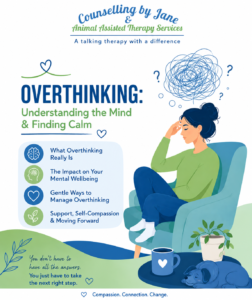
How to Stop Overthinking and Regain Mental Clarity
Have you ever replayed a conversation over and over, worried excessively about a decision, or found yourself stuck in endless “what if” scenarios?
If so, you’re not alone.
Overthinking is the habit of dwelling on thoughts, situations, or decisions without reaching a productive conclusion. While reflection can help us learn and grow, overthinking often leads to stress, anxiety, self-doubt, and mental exhaustion.
In today’s fast-paced world, many professionals, students, parents, and high achievers find themselves trapped in cycles of worry. The problem is that overthinking rarely leads to better decisions. More often, it keeps us stuck and prevents us from taking meaningful action.
Why Do We Overthink?
Overthinking is usually driven by one or more of the following:
• Fear of failure – worrying about making the wrong choice.
• Perfectionism – wanting everything to be exactly right.
• Need for control – trying to predict every possible outcome.
• Past experiences – previous disappointments can make us extra cautious.
• Stress and anxiety – heightened stress often fuels repetitive thinking.
Signs You May Be Overthinking
Some common signs include:
• Replaying past conversations repeatedly
• Struggling to make decisions
• Imagining worst-case scenarios
• Worrying about what others think
• Difficulty switching off your thoughts
• Trouble sleeping due to racing thoughts
• Spending more time thinking than acting
How Overthinking Affects Mental Health
Overthinking can have a significant impact on both emotional wellbeing and productivity. It can increase anxiety, lower self-confidence, contribute to decision fatigue, and delay action. It can also affect relationships when we overanalyse conversations, messages, or situations that may not require such scrutiny.
Reflection vs Overthinking
Healthy reflection helps us learn from experiences by asking:
• What happened?
• What can I learn?
• What should I do next?
Overthinking, on the other hand, keeps us trapped in questions such as:
• What if I made a mistake?
• What if everything goes wrong?
• What do people think of me?
The difference is simple:
Reflection leads to growth. Overthinking leads to stagnation.
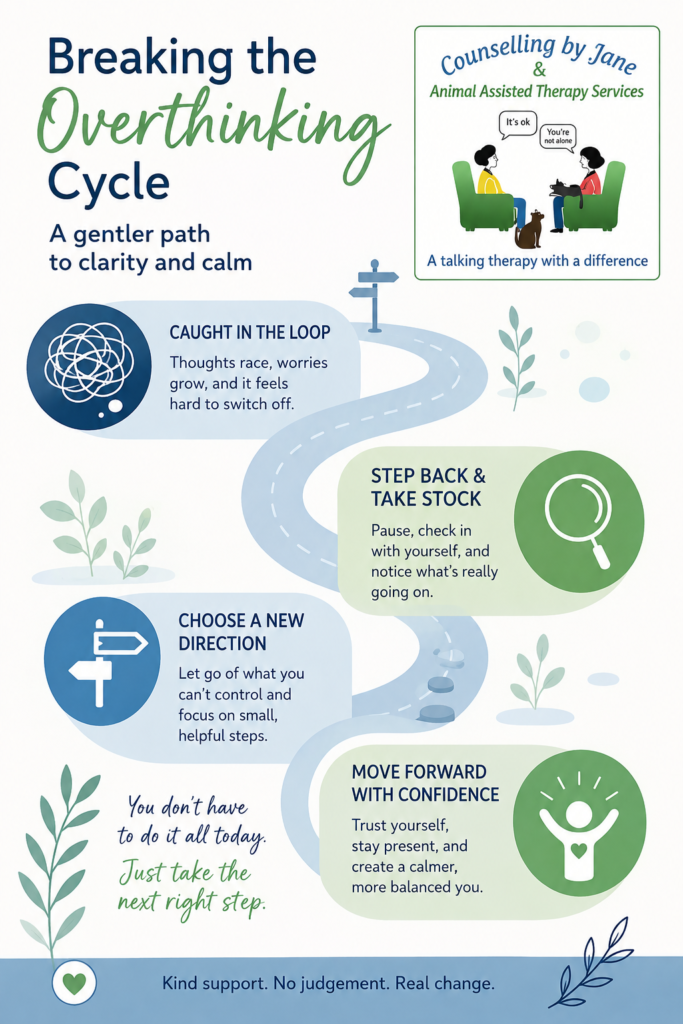
5 Practical Ways to Stop Overthinking
1. Focus on What You Can Control
Ask yourself: “What action can I take right now?”
Shifting your attention from worry to action helps reduce mental clutter.
2. Set Time Limits for Decisions
Not every decision requires endless analysis. Give yourself a realistic timeframe, make a choice, and move forward.
3. Challenge Negative Thoughts
When worries arise, ask:
• Is this thought true?
• What evidence supports it?
• Am I assuming the worst?
4. Embrace Imperfect Action
Progress is often more important than perfection. Taking small steps forward creates confidence and clarity.
5. Practice Mindfulness
Deep breathing, journaling, walking outdoors, or meditation can help bring your attention back to the present moment rather than getting lost in future worries.
Final Thoughts
Overthinking is one of the most common barriers to confidence, productivity, and peace of mind. While thinking things through can be helpful, excessive thinking often keeps us stuck.
The next time you find yourself caught in a loop of worry, pause and ask:
“Is this thought helping me move forward, or is it holding me back?”
Remember, clarity doesn’t come from endless thinking. It comes from taking the next small step.
About the Author
Jane Hupston MBACP (Accred), NCPS (Prof Accred)
Date Written: 22 July 2026
Jane Hupston is an experienced Integrative Counsellor and Clinical Supervisor working with adults and adolescents experiencing anxiety, overwhelm, stress, relationship difficulties, bereavement, low self-esteem, life transitions, and many other challenges.
Drawing on evidence-based approaches including Person-Centred Therapy, Cognitive Behavioural Therapy (CBT), Dialectical Behaviour Therapy (DBT), and Solution Focused Therapy, Jane tailors her work to meet the individual needs of each client.
With 13 years of experience supporting mental wellbeing, resilience, and personal growth, Jane helps clients develop practical coping strategies and create meaningful, lasting change.
To connect with Jane, visit her LinkedIn profile www.linkedin.com/in/jane-hupston
or website www.counsellingbyjane.org.
To book an appointment, call Jane on 07792 847171.